
For global buyers, choosing a print mechanism is rarely a simple width decision. It affects media compatibility, device size, maintenance, and long-term operating cost. A 112mm Print Mechanism usually supports a practical four-inch printing class, often producing an effective print width near 108mm. This format suits shipping labels, warehouse tags, retail receipts, healthcare forms, and product identification labels. The detail is important: a mechanism may accept 112mm media, but its real output depends on printhead design, platen alignment, resolution, and calibration.
Industry data supports this demand. Smithers’ The Future of Printed Labels to 2028 identifies continued growth in digitally produced and variable-information labels, driven by e-commerce, logistics, and short production runs. Pitney Bowes’ Global Parcel Shipping Index also reports sustained parcel-volume expansion across major markets, increasing pressure for dependable on-demand labeling. These trends make compact, flexible printing hardware more valuable. Buyers can use one platform across several workflows. That can reduce training and spare-parts complexity.
But bigger is not always better. A 112mm Print Mechanism may offer a strong balance between coverage and enclosure size, yet it cannot solve poor media selection or weak thermal control. That assumption needs testing. Procurement teams should examine duty cycle, printhead life, interface stability, energy use, and regional service support. TÜV or ISO-related quality evidence can strengthen supplier evaluation, while documented test samples reveal problems that brochures hide. In practice, the best mechanism is not merely wide enough. It is stable during repetitive work, adaptable across markets, and predictable after thousands of labels.
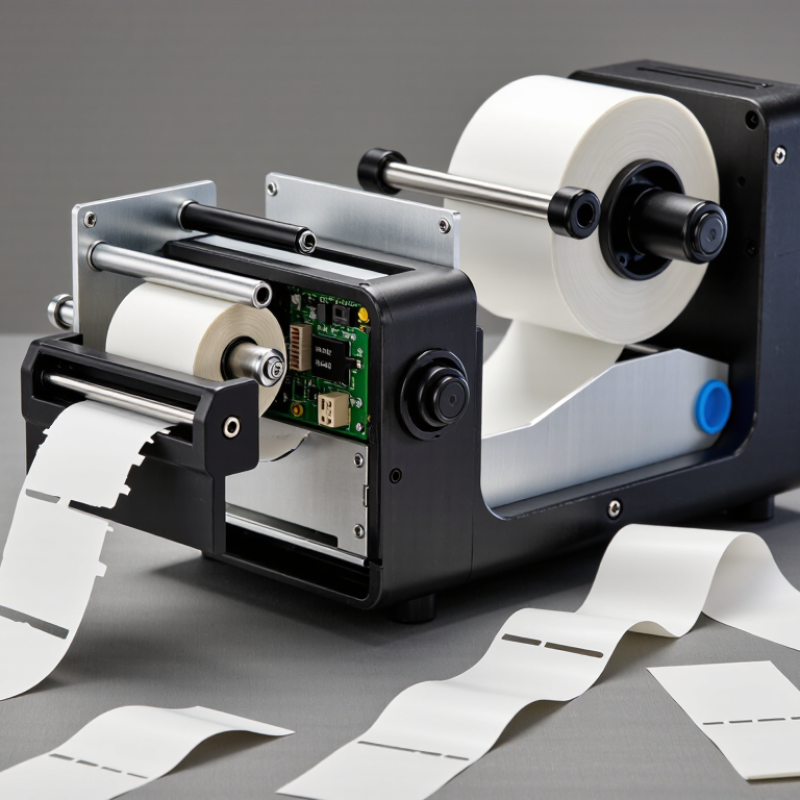
A 112mm print mechanism is the core assembly that feeds label stock and transfers an image onto it. The 112mm figure usually describes the supported media width, not the usable printed area. The thermal printhead, platen roller, feed motor, and sensors work together to keep each label moving evenly. On a workbench, that means the mechanism must guide a wide label without skewing its edges or leaving the barcode too close to the margin. Direct thermal models print through heat-sensitive stock; thermal transfer models use a ribbon. Choose according to label material and expected handling.
The 2023 Parcel Shipping Index reported about 161 billion parcels worldwide in 2022, illustrating the scale of shipping-label demand. For global buyers, a 112mm mechanism can handle common wide shipping labels and forms, but fit is not automatic. Check the actual printable width, media thickness, sensor position, and mounting dimensions against the printer design. One often-missed detail: a 112mm media path may produce a narrower image because the printhead needs edge margins. There is no magic fit.
Tip: Test with your real label roll. Check feed alignment, barcode clarity, and margins; specifications alone can miss small mechanical mismatches.
| Specification or Consideration | Typical Information | Why It Matters to Buyers |
|---|---|---|
| Definition | A print mechanism is the core assembly that feeds media and forms printed images. A 112mm mechanism supports a maximum printable width of up to 112mm. | It can be integrated into a printer or other equipment designed for wider labels, tickets, or receipts. |
| Printable width | 112mm (approximately 4.41 inches) | Check the maximum printable width against the intended layout. Printable width is not necessarily the same as the permitted media width. |
| Resolution options | 203dpi and 300dpi are common options in thermal printing products; availability depends on the specific mechanism. | 203dpi is commonly used for general text and barcodes. 300dpi can render smaller text and finer graphics more clearly. |
| Dot pitch | Approximately 0.125mm per dot at 203dpi and 0.085mm per dot at 300dpi. | Dot pitch helps determine the level of detail a design can reproduce. Confirm that artwork, fonts, and barcode sizes suit the selected resolution. |
| Printing method | Thermal direct printing uses heat-sensitive media. Thermal transfer printing uses a heated printhead and a ribbon. | Choose based on label life, exposure conditions, media availability, and whether ribbon handling is acceptable. |
| Print speed | Maximum speed varies by model, resolution, media, and print coverage. Consult the individual product specification for the rated speed. | Higher speed can improve throughput, but the usable speed may be lower when printing dense graphics or fine detail. |
| Media compatibility | Supported media may include rolls or fan-fold stock, depending on the feed path and printer design. Media thickness and width limits are model-specific. | Verify media dimensions, surface, core, and loading method before selecting a mechanism for an application. |
| Sensing and positioning | Configurations may support gap, black-mark, or continuous-media detection; available sensors vary by design. | Use the sensor type that matches the media so labels or tickets can be positioned consistently. |
| Integration requirements | Mechanical mounting, power supply, control electronics, firmware, and communication interfaces depend on the complete printer design. | Check drawings, connector details, command compatibility, and electrical requirements before integration or replacement. |
| Global deployment | Media standards, power requirements, safety approvals, and local service options can differ by market. | Confirm regional compliance, suitable media availability, and maintenance support for each target market. |
Note: Values and features other than the stated 112mm printable-width category vary by model. Always verify the selected mechanism’s official datasheet and integration drawings before purchase.
It supports labels around four inches wide. These fit cartons, shipping documents, shelf tags, and compliance markings.
Choose 203 dpi for standard labels. Choose 300 dpi for tiny text and sharper two-dimensional codes. Resolution alone is not enough.
Some mechanisms support direct thermal and thermal transfer printing. This helps with short-term labels and longer-life product labels.
Adjustable guides, accurate sensing, and stable thermal control reduce skewed labels and faded areas. Small alignment errors still matter.
USB, Ethernet, and serial connections can simplify replacement planning. Confirm compatibility with existing equipment before purchasing.
Test actual media, roll diameter, print speed, cutter compatibility, and duty cycle. Test dark blocks, tiny text, and dense codes.
The wider path leaves more space for readable text, barcodes, instructions, and regional languages. Operators may scan information faster.
No. A wider mechanism may use more power, require stronger mounting, and increase enclosure size. The fit may still be wrong.
Short demonstrations can hide heat buildup, fading, or motor instability. Run the mechanism for extended periods. Heat changes things.
Test heat, dust, vibration, and long operating hours. These conditions can reveal weaknesses that laboratory checks miss. Specs are not the whole story.
A 112mm Print Mechanism is a compact, reliable printing component designed to produce labels, receipts, tickets, and other media with a maximum print width of approximately 112 millimeters. It works by feeding media through a controlled path while a thermal or other compatible print head transfers text, barcodes, graphics, or transaction details onto the surface. Its design typically emphasizes stable media handling, consistent print quality, efficient operation, and easy integration into different equipment.
Global buyers choose the 112mm format because it offers a practical balance between printing capacity, device size, and operating cost. It is suitable for retail, logistics, healthcare, hospitality, transportation, and industrial applications where clear, durable, and accurately aligned output is important. When purchasing, buyers should evaluate media compatibility, print speed, resolution, connectivity, installation space, maintenance requirements, and long-term reliability. Selecting the right 112mm Print Mechanism helps businesses meet diverse printing needs while supporting efficient workflows and dependable daily performance.
