
Choosing the right 80mm Print Mechanism can shape printer reliability, service costs, and customer satisfaction. For global buyers, the decision involves more than speed or a low unit price. Paper width, print density, cutting performance, mounting dimensions, power requirements, and firmware compatibility all deserve careful review.
This guide introduces ten widely relevant 80mm print mechanisms for retail terminals, kiosks, ticketing equipment, and compact receipt printers. Each option should be assessed against its real operating environment. A busy supermarket may need a strong auto-cutter and stable performance during long shifts. A self-service kiosk may require quiet printing, simple paper loading, and dependable recovery after a paper jam. Small details matter.
Supplier evidence matters too. Buyers should request technical drawings, sample units, lifecycle data, warranty terms, and test results under local voltage conditions. Compliance documents should be checked for the destination market, not simply accepted at face value. Experienced sourcing teams also compare replacement parts, firmware support, packaging quality, and communication speed. The cheapest mechanism may become expensive when rollers wear quickly or integration takes weeks.
No ranking can fit every application. Some performance claims depend on paper quality, temperature, installation accuracy, and maintenance habits. That limitation deserves attention. A practical evaluation combines laboratory specifications with hands-on testing, including repeated printing, cutter cycles, paper changes, and imperfect user handling. The following overview offers a balanced starting point, while leaving room for verification before a large international purchase.
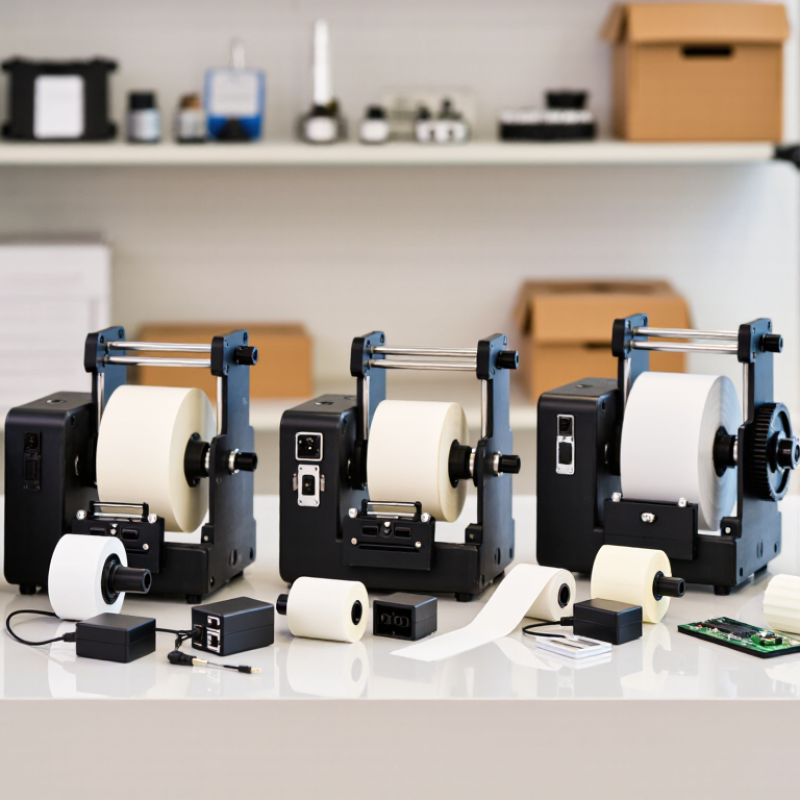
An 80mm print mechanism is built around a thermal printhead, platen roller, drive motor, frame, and paper sensors. The paper usually passes beneath a fixed row of heating elements. Each element activates briefly, creating a dark dot on heat-sensitive paper. Lines form as the motor advances the roll with controlled steps.
The printhead determines resolution, speed, and energy demand. A platen roller must maintain even pressure across the paper path. Small variations can produce pale bands or blurred characters. The motor and gear train control paper movement, while sensors detect paper presence, cover position, and jams. Some designs add an automatic cutter, but this increases space, wiring, and maintenance requirements.
For global buyers, the stated 80mm size needs careful checking. It commonly describes the paper width, not the exact printable width. Confirm the effective print area, mounting holes, connector layout, voltage range, and control protocol. A prototype should test different paper grades, roll diameters, printing speeds, and ambient temperatures. Heat buildup matters during continuous operation. So does dust around the platen.
A specification sheet rarely tells the whole story. In practice, paper alignment may matter more than a small speed advantage. That assumption can fail. Engineers should inspect sample output under weak battery conditions and after repeated cover openings. Service access is another overlooked detail. A mechanism that prints well but resists cleaning may create avoidable operating costs.
Comparing the top 10 mechanisms requires more than reading speed ratings. Check measured output in millimeters per second under continuous printing. A fast mechanism may slow after several receipts because of heat. Request sample prints with dense text, barcodes, and small graphics. Observe paper feeding, cutting alignment, and recovery after a jam. These details reveal practical performance better than a headline specification.
Accuracy depends on print density, paper stability, and motor control. Inspect characters under magnification, especially at the beginning and end of each line. A slight horizontal shift can affect barcode scanning.
Durability requires evidence, not confident wording. Review rated duty cycles, thermal head life, motor construction, and testing conditions. Ask whether results used standard paper or unusually favorable materials. That difference matters. It is easy to overvalue laboratory numbers.
Tips: Compare all ten mechanisms using the same paper, power supply, print file, and temperature range. Record speed, noise, feed errors, and print quality after extended runs. Check service access and replacement-part availability for your market. Do not ignore imperfect data; unclear test conditions should lower confidence. A mechanism that prints slightly slower but stays consistent may serve better than a faster model with frequent pauses. Reliability is often visible in small, repeatable details.
Top 10 80mm print mechanisms demand more than a matching roll width. Global buyers should verify paper paths, interfaces, power input, and firmware behavior before comparing speed.
An 80mm roll usually provides about 72–76mm of printable width. Regional paper tolerances can still affect feeding. A 2024 Grand View Research report valued the global thermal printing market at approximately USD 4.6 billion in 2023. It projects continued growth through 2030, increasing the need for dependable cross-border designs.
Paper compatibility should include 58mm, 80mm, and wider roll options where replacement supply is uncertain. Test thermal paper from at least three suppliers. Some coatings curl near the cutter. That detail is easy to miss. Interfaces should cover USB, serial, Ethernet, Bluetooth, or Wi-Fi, depending on deployment conditions. Firmware needs stable support for ESC/POS commands, character encoding, real-time status, and automatic recovery after paper replacement. Power specifications also deserve careful review. A mechanism designed for 12V operation may fail under an unstable adapter. Models accepting 12V or 24V input can simplify equipment integration, but only when voltage protection is documented. The International Energy Agency reports that global electricity demand continues rising, so standby efficiency matters in high-volume installations. Field testing remains essential. Specifications alone are not enough. A few mechanisms may meet every listed requirement, yet still behave poorly with dense graphics or humid paper.
| No. | Mechanism Type | Supported Paper | Maximum Print Width | Resolution | Typical Speed | Roll and Core Compatibility | Power Requirements | Interface Options | Firmware and Command Compatibility | Cutter Support |
|---|---|---|---|---|---|---|---|---|---|---|
| 01 | Compact 80mm Receipt Mechanism | 79.5–80.0mm thermal paper; 58mm paper can be supported with a reducer | 72mm | 203dpi | 150–200mm/s | Roll diameter up to approximately 83mm; 12mm or 25.4mm core options | 24V DC; approximately 2.0–3.5A peak during printing | TTL serial, USB through controller, or parallel through controller | ESC/POS-style receipt commands; firmware normally resides in the controller | External full or partial cutter recommended |
| 02 | High-Speed Kiosk Mechanism | 79.5–80.0mm thermal paper; center-aligned or left-aligned loading | 72mm | 203dpi | 200–300mm/s | Roll diameter up to approximately 150mm; 25.4mm core commonly used | 24V DC; approximately 3.0–5.0A peak | RS-232, USB, Ethernet, or GPIO via an external control board | ESC/POS-style, raster bit-image, and status-query commands via host firmware | Designed for external auto-cutter integration |
| 03 | Low-Power Mobile Mechanism | 79.5–80.0mm thermal paper; receipt and label-grade media options | 72mm | 203dpi | 80–150mm/s | Roll diameter up to approximately 50mm; 12mm core typical | 9–12V DC; approximately 1.5–2.5A peak | TTL serial, UART, Bluetooth, or USB through a controller | ESC/POS-style text and raster commands; battery management handled externally | Usually tear-bar only; compact cutter available as an add-on |
| 04 | Heavy-Duty Industrial Mechanism | 79.5–80.0mm thermal paper; thicker media subject to platen and motor limits | 72mm | 203dpi | 150–250mm/s | Roll diameter up to approximately 150mm; 25.4mm core typical | 24V DC; approximately 3.5–6.0A peak | RS-232, RS-485, USB, Ethernet, and discrete I/O through controller hardware | ESC/POS-style, raster, barcode, and paper-status commands; programmable controller required | External cutter with jam-detection input recommended |
| 05 | High-Resolution Graphic Mechanism | 79.5–80.0mm thermal paper; suitable for logos, QR codes, and dense graphics | 72mm | 300dpi | 100–180mm/s | Roll diameter up to approximately 83mm; 12mm or 25.4mm core options | 24V DC; approximately 2.5–4.5A peak | USB, TTL serial, or Ethernet through an integration controller | Raster-image and ESC/POS-style commands; host software should control image density | External cutter or tear-bar configuration |
| 06 | Front-Loading Kiosk Mechanism | 79.5–80.0mm thermal paper; front-access loading path | 72mm | 203dpi | 150–220mm/s | Roll diameter up to approximately 150mm; 25.4mm core commonly used | 24V DC; approximately 3.0–5.0A peak | USB, RS-232, Ethernet, and GPIO through a kiosk controller | ESC/POS-style commands with paper-near-end and paper-out status monitoring | Auto-cutter integration supported; cutter must match the paper path |
| 07 | Label-and-Receipt Mechanism | 79.5–80.0mm continuous thermal paper or gap-mark label media | 72mm | 203dpi | 100–180mm/s | Roll diameter up to approximately 83mm; media thickness and liner stiffness must be checked | 24V DC; approximately 2.5–4.5A peak | TTL serial, USB, or GPIO through an external controller | Receipt raster commands; label positioning requires gap, mark, or presenter sensing logic | Guillotine cutter, tear bar, or presenter module depending on configuration |
| 08 | Wide-Margin Receipt Mechanism | 79.5–80.0mm thermal paper; adjustable paper guides | 72mm with approximately 4mm side margins | 203dpi | 180–250mm/s | Roll diameter up to approximately 100mm; 25.4mm core typical | 24V DC; approximately 3.0–5.0A peak | RS-232, USB, Ethernet, or parallel interface through a controller | ESC/POS-style text, barcode, QR-code, and raster commands | External full or partial cutter supported |
| 09 | Long-Life Embedded Mechanism | 79.5–80.0mm thermal paper; standard receipt-grade media | 72mm | 203dpi | 120–200mm/s | Roll diameter up to approximately 83mm; 12mm or 25.4mm core options | 12V or 24V DC depending on motor and heater configuration; peak current must be calculated | UART, USB, RS-232, or custom board-to-board connection | Controller-dependent firmware; supports status, error, black-mark, and paper-end signals when fitted | Optional cutter; tear-bar design is common for compact equipment |
| 10 | Modular Presenter Mechanism | 79.5–80.0mm thermal paper; continuous receipt output with presenter handling | 72mm | 203dpi | 150–250mm/s | Roll diameter up to approximately 150mm; 25.4mm core commonly used | 24V DC; approximately 3.5–6.0A peak including presenter and cutter loads | USB, RS-232, Ethernet, GPIO, and sensor inputs through a kiosk controller | ESC/POS-style printing plus presenter, retract, jam, and sensor-control commands | Integrated or external cutter with presenter and retract functions |
Global demand for 80mm print mechanisms is shaped by retail, hospitality, healthcare, logistics, and ticketing. Grand View Research valued the global thermal printing market at approximately USD 4.6 billion in 2023, with continued growth expected through 2030. That growth increases pressure on installers to choose mechanisms for actual working conditions, not only speed ratings.
For the top 10 mechanisms, installation should begin with a level paper path, stable power, and correct platen pressure. Leave room around the cutter and cooling vents.
A 203 dpi mechanism suits receipts, while 300 dpi supports compact labels and sharper symbols. In busy checkout areas, test at least 500 consecutive receipts before approval. Watch for skew. It often reveals poor frame alignment.
Maintenance is practical, but easy to neglect. Clean the thermal head and platen with approved alcohol wipes during scheduled service. Replace worn cutters before partial cuts become customer complaints. According to Smithers’ thermal printing market analysis, reliability and lifecycle efficiency remain major purchasing factors for commercial users.
Troubleshooting should follow evidence: faint output may indicate low head pressure, wrong paper, or excessive temperature; repeated paper jams often begin with a curled roll or misaligned sensor.
Field teams sometimes replace the mechanism too quickly. That is costly, and not always correct. Record paper type, print density, duty cycle, and failure time. These details expose patterns that casual inspection misses.
For the Top 10 80mm Print Mechanisms, market fit matters more than headline speed. A compact retail counter may need 150mm/s, while a delivery kitchen needs faster output and stronger heat control. Thermal paper width, power input, cutter support, and mounting depth should match the target printer.
Regional demand also changes the decision. Worldpay’s Global Payments Report 2024 states that digital wallets represented about 50% of global e-commerce transaction value in 2023. Yet receipts remain common in food service, pharmacies, transport, and public administration. Buyers serving high-volume environments should prioritize stable paper feeding, 203dpi clarity, and a rated cutter life above basic office use. For mobile or small-format printers, lower power draw may matter more than speed.
Budget selection needs practical testing. Grand View Research projects steady growth for the thermal printing market through 2030, near a five percent annual rate. That growth does not justify overbuying every specification. I have seen buyers choose 300dpi mechanisms for ordinary receipts. It looked impressive, but the added cost brought little value. A better shortlist compares total ownership cost, replacement parts, firmware compatibility, and local service access. Do not trust laboratory speed alone. Humidity, curled paper, dust, and rushed operators can change performance quickly. Some rankings remain imperfect because regional failure data is rarely published.
Buyer-fit comparison based on typical 80mm thermal mechanism specifications, including purchase economy, print speed, image quality, and continuous-duty capability. Scores are normalized on a 0–100 scale and should be confirmed against the final supplier datasheet.
How to read the chart: Entry-level direct thermal mechanisms prioritize low printer cost, while high-speed, kiosk, rugged, linerless, and thermal-transfer designs provide stronger performance for demanding retail, hospitality, logistics, and self-service applications.
It is a thermal printing assembly designed for rolls commonly measuring 80mm wide. The main parts include a printhead, platen roller, motor, frame, and sensors. The paper moves beneath heated elements. Dark dots form each printed line.
Not usually. It often describes the paper width, not the usable print area. Check the effective width before selecting a mechanism. Small differences can affect receipt layouts.
The thermal printhead strongly affects resolution, speed, and energy use. The platen roller must apply even pressure. Poor pressure may create pale bands or blurred characters. Alignment matters too.
A motor and gear train advance the roll in controlled steps. The printhead creates one line while the paper pauses or moves precisely. Sensors detect paper presence, cover position, and possible jams.
No. A cutter can improve workflow in busy environments. However, it requires extra space, wiring, and maintenance. A small mobile printer may work better without one. More features are not always better.
Test several paper grades and roll diameters. Check printing at different speeds and temperatures. Also test weak battery conditions and repeated cover openings. Real conditions can expose problems quickly.
Stable paper feeding, clear output, strong heat control, and durable cutter support are useful. Service access also matters. Dust around the platen can reduce consistency. A fast specification may still disappoint.
Compare total ownership cost, replacement parts, firmware compatibility, and local service access. Do not pay extra for unnecessary resolution. I have seen impressive specifications add little practical value. That judgment can be wrong without field testing.
Humidity, curled paper, dust, and heat buildup may change output quality. Continuous operation needs careful thermal testing. Cleaning access should be checked before purchase. A mechanism that resists cleaning becomes expensive.
This guide examines the essential design, components, and operating principles behind an 80mm Print Mechanism, explaining how paper paths, thermal systems, motors, sensors, cutters, and control boards work together to deliver reliable output. It compares ten leading mechanism types by printing speed, positioning accuracy, noise, service life, and resistance to demanding operating conditions, helping buyers understand the practical trade-offs between performance and cost.
The article also explores global compatibility, including paper formats, communication interfaces, power requirements, firmware integration, and regional operating considerations. It provides practical advice for installation, routine maintenance, fault diagnosis, and troubleshooting across retail, logistics, hospitality, industrial, and self-service applications. Finally, the buyer selection guide shows how to match an 80mm Print Mechanism with specific printer designs, target markets, workload expectations, available budgets, and long-term support needs.
