Choosing a compact thermal engine is rarely as simple as matching paper width. A 2 Inch Thermal Printer Mechanism must balance print quality, power consumption, heat control, and mechanical durability. Global buyers often specify 58 mm media, but that common size hides important differences. A kiosk may need continuous printing, while a handheld terminal may prioritize low current draw and shock resistance. Small details matter.
Thermal-printing systems specialist Dr. Tetsuya Kato describes the design challenge clearly: “A mechanism is not merely a printer core; it is where heat, paper, speed, and reliability meet.” This principle guides our review of the top ten mechanism types. We examine direct-thermal heads, platen structures, paper-loading designs, cutter compatibility, sensor layouts, and interface flexibility. We also consider real operating conditions, including humid warehouses, dusty counters, frequent paper changes, and limited battery capacity.
Performance claims still need caution. A higher resolution does not automatically produce better receipts. A faster mechanism may create more heat or shorten component life. The cheapest option can become expensive after repeated jams and service calls. Our comparison is practical, not perfect. Supplier data may use different test conditions, and field performance can vary by paper quality, firmware, and assembly design. Buyers should request samples, duty-cycle results, and life-test evidence before approving a purchase. Look closely. The right 2 Inch Thermal Printer Mechanism should fit the complete device, not merely satisfy a specification sheet.
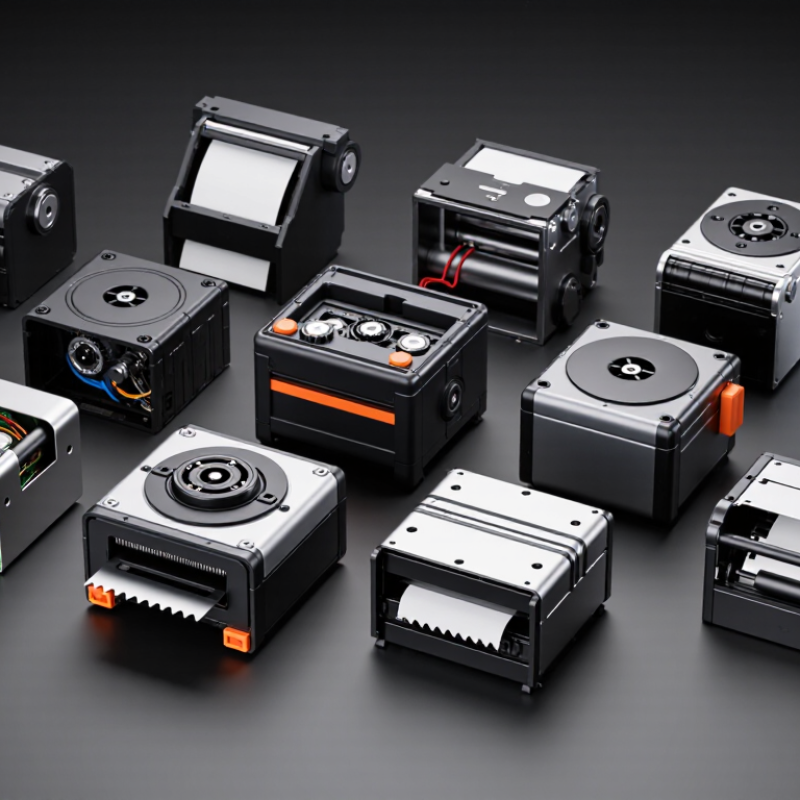
Defining the 2-Inch Class: 58 mm Media, 203 dpi, and 24 V Inputs
The 2-inch thermal printer class usually accepts 58 mm media. This dimension describes the paper width, not the complete mechanism size. Housing, mounting holes, and cable positions can vary considerably.
At 203 dpi, the printhead produces about eight dots per millimeter. A 58 mm path therefore contains roughly 464 dot positions before margins. Actual printable width may be narrower. Check the supplier’s drawing, not only the product title. Small differences affect receipts, labels, and barcode clarity.
Most mechanisms in this class use a 24 V DC input. The voltage must match the power supply and control board. Current demand can rise during dense black printing or motor startup. Thin wiring may cause voltage drops and uneven images. I have seen specifications omit peak current, which makes comparison difficult. Ask for operating, standby, and peak values. Thermal paper quality also matters. Poor coating can create pale text, while excessive heat may darken edges. Some mechanisms include cutters or paper sensors, but these features are not guaranteed by the 2-inch classification. A practical review should confirm media width, dpi, voltage, connector layout, print speed, and environmental limits. There is no perfect universal format. The best choice depends on the enclosure, duty cycle, and required image detail.
Explaining Thermal Mechanism Architecture: Heads, Platens, Motors, and Sensors
A 2-inch thermal mechanism usually accepts 58 mm paper and uses a 203 dpi printhead with about 384 heating dots.
Grand View Research valued the global thermal printing market at approximately USD 4.2 billion in 2023, showing why compact mechanisms remain commercially important.
The architecture deserves closer inspection.
The thermal head controls image density through individually heated resistors. Its temperature sensor prevents overheating during long receipts. The platen presses paper against the head, while its rubber surface controls traction and print sharpness.
Too much pressure increases motor load. Too little pressure creates pale bands. Small differences matter.
Stepper motors offer predictable paper movement, while compact DC motors can reduce cost and size.
Optical sensors detect paper presence, gaps, or black marks. A poorly positioned sensor may cause false paper-out signals.
According to Smithers’ Future of Thermal Printing to 2028, direct thermal printing continues gaining use in mobile, retail, and logistics applications. That trend favors mechanisms with simple maintenance and low energy demand.
Still, published market forecasts vary widely. They often combine printers, engines, and consumables, which can confuse purchasing decisions.
Engineers should test paper curl, platen wear, sensor response, and head temperature under real operating conditions.
A clean specification sheet can still mislead.
Comparing the Top 10 Types: Tear-Off, Cutter, Presenter, Peeler, and More
Top 10 2 Inch Thermal Printer Mechanism Types for Global Buyers
A 2-inch mechanism can shape the entire user experience. Tear-off models suit receipts, tickets, and simple service counters. Cutter mechanisms deliver clean edges during fast transaction cycles. Presenter types hold the printout briefly, reducing paper jams and customer confusion. Peeler mechanisms separate labels from backing paper for compact dispensing stations. Other useful options include linerless, kiosk, wall-mount, embedded, wristband, and dual-function mechanisms. Each type needs different paper paths, sensors, and installation clearances.
According to Fortune Business Insights, the global thermal printing market reached about USD 4.57 billion in 2023. The report also forecasts continued growth through 2032, supported by retail, logistics, healthcare, and self-service applications. This growth does not make every mechanism suitable. A cutter may fail in dusty environments without maintenance. A presenter can improve handoff control, but it adds moving parts. Peeler units save operator time, yet poor label calibration causes waste. No mechanism is perfect.
Tips:
Test real paper before approval. Check paper width, roll diameter, voltage, print speed, and cutter life. Ask for jam-recovery tests. Measure the outlet opening with a ruler. Small gaps matter. Industry data can guide selection, but field trials reveal the uncomfortable details. Temperature, humidity, adhesive strength, and user behavior may change performance. Leave space for cleaning and replacement. A cheaper mechanism may become expensive after repeated service calls.
Ranking Buyer Metrics: 50–150 mm/s Speed, 50 km Life, and Duty Cycle
Top 10 2 Inch Thermal Printer Mechanism Types for Global Buyers
For global buyers, speed, operating life, and duty cycle deserve more attention than a long feature list. A 50–150 mm/s rating shows possible output speed, not guaranteed daily performance. In practical testing, measure continuous printing with the intended paper, voltage, and print density. Speed matters.
Compact embedded mechanisms suit handheld terminals and small control panels. Panel-mount models support easier servicing in kiosks.
Receipt mechanisms often prioritize 100–150 mm/s output, while portable designs may remain near 50–80 mm/s to protect battery life. Direct thermal units are simple, but paper sensitivity can affect readability and storage life.
A 50 km mechanism life should be checked against test conditions, not accepted as an isolated number. Ask whether the figure includes platen wear, cutter operation, temperature changes, and regular cleaning. Duty cycle is equally important: a mechanism rated for short bursts may struggle with repeated 30-minute print sessions. Look for stated pages per minute, standby intervals, and motor temperature limits. A neat specification can still mislead.
From field evaluation, I rank sustained speed above peak speed, then life, then duty cycle clarity. That order is debatable. A low-speed mechanism with stable feeding may outperform a faster unit in a busy ticket terminal. Check paper alignment, noise, mounting tolerance, and replacement access before approval. Small details decide uptime. Manufacturers should provide sample test data, while buyers should repeat testing under local operating conditions.
Checking Global Compliance: ESC/POS, USB, CE, FCC, RoHS, and ISO 9001
Choosing a two-inch thermal printer mechanism involves more than print speed and paper width. Global buyers must verify the complete compliance chain. ESC/POS compatibility should be tested with actual commands, not copied from a datasheet. Print, feed, status, and error responses need checking. USB adds another question: connector type, power profile, drivers, and cable behavior. USB compliance is not automatic because a socket is present. Request test logs and firmware details. Small gaps matter.
CE marking requires applicable European conformity assessment and technical documentation. FCC requirements focus on electromagnetic emissions in relevant markets, while RoHS restricts hazardous substances. Ask for declarations, test reports, material evidence, and model-number consistency. The Global E-waste Monitor 2024 recorded 62 million tonnes of e-waste in 2022, with only 22.3% formally recycled. This strengthens the case for traceable materials and credible RoHS records. ISO 9001 certification covers a quality management system, not product safety or electrical performance. The ISO Survey 2022 reported 1,265,216 ISO 9001 certificates worldwide, yet each certificate’s scope still requires careful review. Check the issuing body, validity, production site, and covered processes. Do not accept a recycled certificate. One weakness remains: buyers often check paperwork after sampling, not before. That reverses the risk. A pre-shipment matrix linking each mechanism type to every required document is safer, although no document replaces physical testing.
Top 10 2 Inch Thermal Printer Mechanism Types for Global Buyers
Typical market speed ranges for 58–60 mm thermal mechanisms, with global compliance checkpoints for ESC/POS, USB, CE, FCC, RoHS, and ISO 9001.
ESC/POS: Confirm command compatibility because support varies by firmware and controller.
USB: Check whether the mechanism is supplied with a USB controller or requires an external mainboard.
CE, FCC, and RoHS: These requirements generally apply to the completed electrical product and its intended market.
ISO 9001: This is a manufacturer quality-management certification, not a mechanism performance rating.
Conclusion
This guide explains how to evaluate a 2 Inch Thermal Printer Mechanism for compact receipt, ticket, label, and kiosk applications. It defines the 2-inch class through 58 mm media, commonly used 203 dpi resolution, and 24 V power inputs, then examines the main internal components, including the thermal head, platen roller, drive motor, and paper or position sensors. Understanding how these parts work together helps buyers compare reliability, print quality, maintenance needs, and installation requirements.
The article compares ten mechanism types, including tear-off, cutter, presenter, peeler, and other specialized configurations. It also ranks practical purchasing criteria such as 50–150 mm/s print speed, approximately 50 km operating life, and suitable duty-cycle performance. Finally, it highlights global compatibility and quality considerations, including ESC/POS support, USB connectivity, CE and FCC requirements, RoHS compliance, and ISO 9001-based manufacturing controls. These guidelines help international buyers select a dependable mechanism that matches their media, workflow, and compliance needs.