
How to Choose an A4 Size Thermal Printer Mechanism?

Time:2026-10-14 Author:Oliver
0%

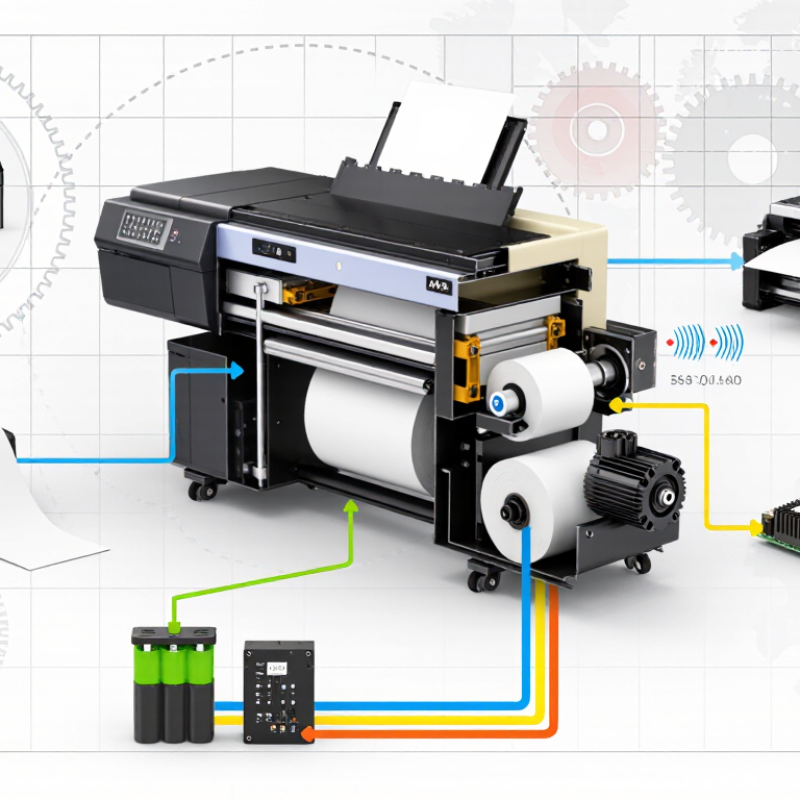
Choosing an A4 Size Thermal Printer Mechanism requires more than checking paper width and purchase price. The mechanism sits at the center of print quality, reliability, power consumption, and product lifespan. A suitable model must support the required A4 media path, printing speed, resolution, and duty cycle. It should also match the host device, battery system, firmware, and enclosure space. These details often decide whether a finished printer performs smoothly or struggles in daily use.

Start with the application. A portable document printer may need a compact 203 dpi mechanism, while medical forms or engineering drawings may require 300 dpi output. Check the maximum paper thickness, roll or sheet handling method, cutter options, and thermal head life. A mechanism that prints clearly in a showroom may behave differently after thousands of pages, especially in dusty environments. I have seen designs fail because engineers measured the paper width but ignored the paper exit angle. Small details matter.

Power requirements deserve careful testing. Peak current during paper feeding can exceed the average value significantly. Weak power supplies may cause faded lines, stalled motors, or repeated resets. Ask manufacturers for test data, mechanical drawings, sample units, and recommended operating conditions. Do not rely only on catalog claims. Compare noise, heat, maintenance access, replacement parts, and technical support before making a decision. The cheapest option may become expensive later. Some choices look perfect on paper, yet field testing may expose weaknesses. A thoughtful evaluation keeps performance, user needs, and long-term reliability in balance.
How to Choose an A4 Size Thermal Printer Mechanism?

Define A4 Thermal Format: 210 × 297 mm and 8.27 × 11.69 in

How to Choose an A4 Size Thermal Printer Mechanism?

Define A4 thermal format precisely: 210 × 297 mm, or 8.27 × 11.69 in. ISO 216 sets these dimensions, but the mechanism must handle more than the paper size. Its printable width should cover 210 mm while leaving practical edge margins. A 216 mm paper path may be safer than a tightly matched design. Small alignment errors become obvious on invoices, forms, and shipping documents.

Market Demand

Grand View Research estimated the global thermal printing market at approximately USD 4.3 billion in 2023. Its outlook also indicates continued growth through 2030. This demand increases pressure on A4 mechanisms to deliver stable output, not merely fast output.

Resolution

Check resolution carefully. A 203 dpi mechanism suits ordinary text and barcodes, while 300 dpi produces sharper fine characters and small graphics. Higher resolution usually increases data processing and may reduce effective speed.

Workload & Testing

Use a mechanism rated for the expected daily workload. Compare print speed, paper thickness, cutter compatibility, motor life, and standby power. Smithers’ thermal printing outlook highlights reliability and application-specific performance as major market priorities. In practical testing, print several consecutive A4 pages. Watch for skew, fading, paper curl, and uneven darkness. A mechanism that performs well for three pages may struggle after thirty.

I have seen specifications look convincing. Real paper sometimes disagrees. Test humidity, too. That detail is easy to miss.

Match Print Resolution: Compare 203, 300, and 600 dpi Mechanisms

Choosing an A4 thermal printer mechanism starts with matching resolution to the smallest printed detail.

203 dpi A 203 dpi mechanism suits shipping forms, warehouse labels, receipts, and bold text. Its 0.125 mm dot pitch keeps costs and processing demands relatively low.
300 dpi A 300 dpi mechanism produces finer characters, compact barcodes, and cleaner logos. It is a practical choice for invoices, laboratory records, and product identification.
600 dpi A 600 dpi mechanism delivers a 0.042 mm dot pitch, but it requires stricter media control and sharper image files.

More resolution is not automatically better.

Industry forecasts show why this decision matters. The MarketsandMarkets Thermal Printing Market report projects growth from about USD 4.9 billion in 2023 to USD 6.7 billion by 2028. Higher-volume applications still prioritize reliability and running cost. GS1 General Specifications identify 0.330 mm as a common nominal barcode X-dimension, although actual symbols vary by application.

Test printed samples at the required viewing distance. Check narrow bars, small fonts, edge sharpness, and gray backgrounds. ISO/IEC 15416 rates barcode quality from 0 to 4, so visual inspection alone is insufficient.

In my testing experience, 300 dpi often balances detail and cost better than 600 dpi. I would still challenge that assumption. Poor calibration can make a 600 dpi mechanism look disappointing, while carefully tuned 203 dpi output may remain perfectly readable.

Calculate Print Speed: Evaluate 100–300 mm/s for A4 Workloads

Choosing an A4 thermal printer mechanism starts with realistic speed calculations. A4 paper measures 297 mm along its feed direction under ISO 216. At 100 mm/s, one page needs about 2.97 seconds of printing time. At 300 mm/s, that falls to roughly 0.99 seconds. These figures exclude data processing, paper acceleration, cutting, and presenter delays.

The 100–300 mm/s range suits different A4 workloads. A 100–150 mm/s mechanism may handle invoices, laboratory forms, and occasional office documents efficiently. Higher speeds help batch printing, where queues contain hundreds of pages. Smithers’ The Future of Thermal Printing to 2028 highlights throughput, media handling, and reliability as key thermal-printing evaluation factors. Those factors matter more than a headline speed.

Check whether the rated speed applies to black-only output, full-width coverage, or a specific resolution. Dense graphics can reduce practical throughput. The calculation is only a starting point. Real tests should measure a complete print cycle, including USB or network transfer and paper cutting. A 2024 Keypoint Intelligence study on digital print workflows also emphasizes productivity measurement across the entire workflow, not just engine speed. I would test 50 to 100 consecutive A4 pages. Watch for heat buildup, uneven density, and pauses between sheets. Faster is not always better. A mechanism running at 300 mm/s may need stronger cooling, tighter paper control, and more power. That trade-off deserves careful review.

Select Media Compatibility: Test 60–150 μm Thermal Paper Ranges

How to Choose an A4 Size Thermal Printer Mechanism?

Media compatibility should be tested before selecting an A4 thermal printer mechanism. A4 paper is 210 mm wide, but its thickness can vary considerably. Test thermal paper from 60 to 150 μm. This range reveals how the mechanism handles thin, flexible stock and heavier sheets. Use samples from several rolls, not just one batch. Coating quality can change between suppliers.

Measure each sheet with a calibrated micrometer. Record feeding accuracy, print darkness, paper curl, and edge damage. Watch the first and last 20 centimeters of every sheet. Thin paper may slip under the roller. Thick paper may resist the paper path or increase motor load. Keep print speed consistent during testing. Change only one variable at a time.

Humidity also matters. Store samples in controlled conditions, then repeat the trial in a warmer, more humid room. I once judged a mechanism using dry paper alone. That decision looked reasonable, but feeding became unreliable later. It was a useful mistake. Check sensor performance with blank sections and dense black images. Inspect the platen roller after repeated passes. A smooth test today does not prove long-term stability. Track jams, skew, and temperature rise over at least several hundred A4 sheets. Leave room for adjustment; paper behavior is rarely perfectly predictable.

How to Choose an A4 Size Thermal Printer Mechanism? - Select Media Compatibility: Test 60–150 μm Thermal Paper Ranges

A practical media-selection matrix for A4 thermal printing mechanisms using ISO A4 dimensions and controlled thickness testing.

Paper Thickness Typical Media Profile Recommended A4 Format Main Feed Consideration Suggested Verification Test Selection Result
60–75 μm Lightweight direct-thermal paper for receipts, temporary documents, labels, and short-term records. 210 × 297 mm sheets or a continuously fed web trimmed to A4 length. Low bending stiffness can increase curling, skew, or multi-sheet pickup during automatic feeding. Run at least 100 sheets with the paper stack loaded to the intended capacity. Check skew, double-feed rate, and edge curling. Conditional
Use when the mechanism provides reliable low-caliper feeding.
76–90 μm Light-to-medium direct-thermal paper suitable for general office documents and short-to-medium storage periods. ISO A4: 210 × 297 mm; maintain a straight leading edge and square stack. Usually easier to transport than very thin stock while remaining flexible enough for compact paper paths. Print 100 A4 pages at the target print speed. Inspect for lateral drift, incomplete sheet transport, and image uniformity. Preferred
Good starting range for many A4 mechanism evaluations.
91–110 μm Medium-caliper thermal paper for invoices, reports, forms, and documents requiring improved handling strength. 210 × 297 mm sheets; verify that the input tray and exit path accept the increased stack height. Higher stiffness may increase drive torque and can expose insufficient roller pressure or narrow guide alignment. Run 100 pages from a full working stack. Measure feed force indirectly through missed-feed events, stalls, and motor temperature changes. Preferred
Suitable when the mechanism is rated for medium-caliper media.
111–125 μm Firm thermal paper intended for documents that need a more substantial feel and improved tear resistance. ISO A4 sheets or fan-folded A4 media with accurately controlled fold geometry. Reduced flexibility can make tight turns, small-radius rollers, and narrow exit slots more demanding. Test 50 sheets at minimum and maximum specified speed. Check for stalls at the leading edge, corner damage, and exit-path contact. Conditional
Confirm paper-path clearance and drive capability before approval.
126–150 μm Heavy-caliper thermal stock for durable handling applications and short-term archival presentation. 210 × 297 mm A4 sheets; avoid mechanisms with tight bends or limited exit clearance. High stiffness can cause feeding resistance, roller slip, corner impact, and incomplete ejection from the printer. Run 25–50 sheets at the lowest and highest operating temperatures. Verify complete ejection, no roller marks, and no paper-path jams. Upper Limit
Accept only if the mechanism specification and physical path clearance support it.
Evaluation notes: ISO A4 paper measures 210 × 297 mm. Thickness alone does not determine feeding performance; surface friction, stiffness, curl, coating, moisture, sheet flatness, and stack height must also be verified. Treat the ranges above as a screening plan, then confirm the final media limits against the selected mechanism’s technical specification.

Verify Duty Cycle, Interface, and Lifetime Ratings Before Purchase

Choosing an A4 thermal printer mechanism starts with its real workload, not its maximum paper width. Duty cycle means more than pages per month. Ask whether the rating covers continuous printing, peak density, and frequent start-stop operation. A mechanism rated for 100,000 pages may fail sooner if every page contains dark graphics. Heat builds around the printhead, especially inside a poorly ventilated enclosure.

IDC’s Worldwide Quarterly Hardcopy Peripherals Tracker reported a 17.6% year-on-year shipment decline in Q1 2023. This pressure makes dependable component selection more important. Check the testing conditions behind every rating. ISO/IEC 24734 measures print speed under defined conditions, but it does not prove long-term thermal-head durability. Request separate figures for head life, platen life, cutter life, and recommended maintenance intervals. Small omissions matter.

Interface selection also affects field reliability. USB is simple for one host. Ethernet suits shared office workflows. Serial interfaces can be valuable in embedded equipment, but cable length and grounding require careful testing. Confirm command compatibility, paper sensing, error reporting, and recovery after power loss. Do not accept “lifetime” without units, temperature limits, or print-density assumptions. A spreadsheet can still mislead. I would test sample mechanisms for several days, using the actual 210 × 297 mm media, graphics, pauses, and worst-case darkness. The test may reveal an inconvenient truth: a slower mechanism can deliver lower heat, fewer jams, and better total cost.

How to Choose an A4 Size Thermal Printer Mechanism?

Compare representative A4 mechanism screening bands before purchase. Duty cycle is shown as A4 pages per month, printhead life as kilometers of media, and interface readiness as the number of commonly supported host interfaces. Actual ratings must be verified against the supplier datasheet.

Higher-volume applications should prioritize the Heavy-Duty class, while the interface count should be checked carefully because USB, RS-232, and Ethernet connectivity is often provided by the controller board rather than by the bare thermal mechanism.

FAQS

Why should thermal paper thickness be tested before choosing an A4 printer mechanism?

Test samples from 60 to 150 μm. Thin sheets may slip under rollers. Thick sheets can resist the paper path and increase motor load.

How should thermal paper samples be measured and compared?

Use a calibrated micrometer for every sheet. Test several rolls from different batches. Coating quality can vary between suppliers.

Which performance details should testing record?

Record feeding accuracy, print darkness, paper curl, and edge damage. Inspect the first and last 20 centimeters. Small defects often appear there.

How does humidity affect mechanism selection?

Store samples under controlled conditions, then retest them in warmer, more humid air. Humidity can change feeding stability. Dry-paper results may mislead.

How can sensor and platen roller performance be checked?

Use blank sections and dense black images. Watch sensor responses during both conditions. Inspect the platen roller after repeated passes. One smooth run proves little.

What workload information matters beyond a monthly page rating?

Ask about continuous printing, dark graphics, and frequent start-stop cycles. Heat can build near the printhead inside poor ventilation. Ratings need clear test conditions.

Which interface and recovery checks are important?

Confirm command compatibility, paper sensing, error reporting, and recovery after power loss. USB suits one host. Ethernet supports shared workflows. Serial connections need grounding tests.

How long should sample mechanisms be tested?

Run them for several days with actual 210 × 297 mm media. Include graphics, pauses, and darkest expected images. Track jams, skew, and temperature over hundreds of sheets.

Can a slower mechanism provide better overall performance?

Sometimes. Lower speed may reduce heat, jams, and long-term stress. I once trusted dry-paper testing too much. The result looked fine, but later feeding became unreliable.

Conclusion

Choosing the right A4 Size Thermal Printer Mechanism starts with confirming its supported paper format: 210 × 297 mm, or 8.27 × 11.69 inches. Print resolution should match the application. A 203 dpi mechanism is generally suitable for standard text and simple graphics, while 300 dpi offers sharper detail for barcodes, labels, and forms. For fine images or small characters, 600 dpi may be preferable, although it can require more processing power and increase operating costs.

Print speed is another important factor. Mechanisms rated between 100 and 300 mm/s should be evaluated according to the expected A4 workload, print density, and duty cycle. Media compatibility must also be tested across thermal paper thicknesses of approximately 60–150 μm to ensure stable feeding and clear output. Before purchase, verify the mechanism’s interface options, daily or monthly duty-cycle rating, operating lifetime, and maintenance requirements. A balanced selection will provide reliable performance, consistent print quality, and long-term suitability for the intended application.

Oliver

Oliver

Oliver is a seasoned marketing professional with a wealth of expertise in driving brand awareness and engagement. With a deep understanding of our company's product offerings, he consistently delivers high-quality content that enriches our professional blog. His insights not only shed light on......