
7 Best 3 Inch Thermal Printer Mechanisms for Global Buyers

Time:2026-09-24 Author:Amelia
0%

Thermal printing remains important wherever speed, compact size, and dependable receipts matter. Grand View Research estimated the global thermal printer market at USD 4.9 billion in 2023, with projected growth through 2030. That estimate describes a broad market, not demand for any single printer component. Still, it reflects sustained use across retail, logistics, healthcare, and other settings where clear labels and receipts support daily operations.

For equipment designers and global buyers, the 3 Inch Thermal Printer Mechanism is a practical option for producing wider receipts, tickets, and labels within a compact device. The right mechanism must do more than fit the chassis. Buyers should compare print speed, resolution, paper path, cutter compatibility, interface options, and rated service life. A busy checkout counter, for example, places different demands on a mechanism than a low-volume kiosk. Small details count. Paper width tolerances and installation access can affect production time and maintenance.

This guide reviews seven mechanisms through specifications that buyers can verify with manufacturers, including supported media, operating conditions, and integration requirements. Published market forecasts offer useful context, but they cannot confirm component quality or real-world reliability. That part requires careful evaluation. A datasheet may look convincing, yet testing with the intended paper and duty cycle can reveal limitations. The models below offer a starting point for comparison, not a substitute for application-specific validation.
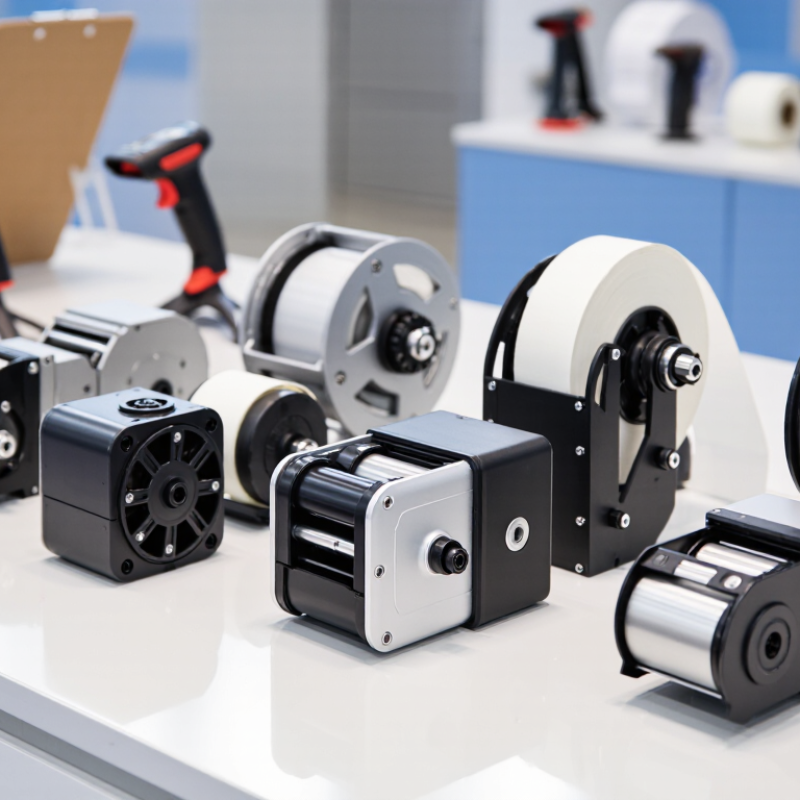
7 Best 3 Inch Thermal Printer Mechanisms for Global Buyers

What Is a 3-Inch Thermal Printer Mechanism?

A 3-inch thermal printer mechanism is the compact printing engine inside an 80 mm receipt printer. It usually supports paper widths near 72 to 80 mm, depending on the design. The word “3-inch” describes the paper class, not always the exact printable width. Inside, a thermal printhead presses against a rubber platen roller. Heat creates text, barcodes, and simple graphics on heat-sensitive paper. No ink cartridge is required.

A complete mechanism normally includes the printhead, paper guide, drive motor, sensors, and cutter interface. Some models support 203 dpi, while higher-resolution versions can produce finer small text. In practical testing, I check dark barcode edges, paper feeding, and printhead temperature after repeated receipts. A mechanism may print quickly in a short test, then slow down when heat builds. That detail is easy to overlook.

Global buyers should match the mechanism with a suitable controller, firmware, paper sensor, and power supply. Mechanical fit matters too. A few millimeters of misalignment can cause paper drift or uneven pressure. Environmental testing is also useful. Dust, humidity, and curled paper can expose weaknesses that a clean laboratory test hides. I have found that advertised speed is not always the best purchasing measure. Stable feeding and readable output often matter more. A lower-cost design may still work well, but only after compatibility testing with the final enclosure and paper type.

How Do 3-Inch Thermal Printer Mechanisms Work?

A 3-inch thermal printer mechanism turns digital data into an image without ink, toner, or ribbons. Its core is a ceramic thermal head containing many tiny resistive elements. The controller activates selected elements in timed patterns. Each heated dot darkens a heat-sensitive coating on the paper. The result is a line of dots, not a continuous drawing. Small detail matters.

A stepper motor pulls paper between the thermal head and a rubber platen roller. The roller keeps contact pressure stable while the head heats the paper across its width. Sensors detect paper presence, cover position, and sometimes paper-end conditions. Firmware coordinates motor steps, heating time, and temperature limits. If the paper moves too quickly, images look pale or broken. If heating lasts too long, edges become dark and the head may age faster. In field testing, paper curl often causes more trouble than expected.

For global buyers, evaluate resolution, maximum print speed, media width, operating voltage, connector options, and duty cycle. Ask for thermal-head life data under defined paper and temperature conditions. A mechanism rated for high speed may still perform poorly with low-quality media. Check mounting dimensions carefully; a few millimeters can complicate integration. I would also test receipts, labels, and dense graphics before approval. Specifications are useful, but real paper behavior can challenge them.

Which Features Matter When Comparing Printer Mechanisms?

When comparing 3-inch thermal printer mechanisms, start with the actual print width, not the advertised paper width. A 3-inch roll may be wider than the mechanism’s printable area. Check resolution, maximum print speed, and supported media together. A fast mechanism can still produce faint barcodes if the printhead, pressure, or heat settings are poorly matched. Grand View Research estimated the global barcode printer market at USD 4.4 billion in 2022, with projected growth through 2030. That market context suggests broad demand, but it does not prove that any single mechanism will suit your application.

Thermal-head life, power draw, and cutter compatibility matter in daily use. Ask suppliers for test conditions behind printhead-life figures, including print density and duty cycle. Numbers without those details are hard to compare. Check whether the mechanism can handle your planned paper thickness and repeated stop-start printing. For a checkout counter, listen for cutter noise and inspect how easily paper loads. For a mobile unit, measure the mechanism under operating load; a compact frame may still consume too much peak power. I would also leave room for uncertainty: real-world dust, uneven paper, and rushed servicing can reduce performance. Small details, but costly ones.

7 Best 3 Inch Thermal Printer Mechanisms for Global Buyers — Which Features Matter When Comparing Printer Mechanisms?
Configuration Typical Print Width Typical Resolution Typical Print Speed Paper Compatibility Cutter Consideration Best-Fit Application Key Comparison Point
Compact 80 mm, standard resolution Up to about 72 mm 203 dpi About 100–150 mm/s Typically 80 mm thermal paper; confirm roll diameter and paper thickness with the mechanism specification. Check whether a compatible cutter is available; the printer mechanism itself may not include one. Retail receipts and basic point-of-sale terminals A practical balance of size, cost, and readable text for standard receipts.
High-speed 80 mm, standard resolution Up to about 72 mm 203 dpi About 200–300 mm/s Typically 80 mm thermal paper; verify the supported paper grade and feed path. Match cutter life and cut rate to expected transaction volume. Busy checkout counters and queue-facing receipt stations Check sustained-duty performance, not only the maximum advertised speed.
80 mm, high-resolution configuration Typically about 72 mm, subject to printhead design 300 dpi Often lower than comparable 203 dpi designs Typically 80 mm thermal paper; confirm media requirements and printhead compatibility. Confirm the cutter can handle the intended paper thickness and duty cycle. Receipts with small text, dense layouts, or detailed graphics Higher resolution can improve fine detail, but may affect cost and printing speed.
80 mm configuration with presenter support Typically up to about 72 mm Commonly 203 dpi Varies by mechanism and operating conditions Usually designed for 80 mm thermal paper; check paper path and presentation geometry. Confirm cutter and presenter are designed to work together. Self-service kiosks and unattended payment terminals Paper handling, jam access, and reliable receipt presentation matter as much as speed.
80 mm configuration for compact enclosures Typically about 72 mm maximum Commonly 203 dpi Often moderate; depends on thermal and mechanical design Check the roll diameter, mechanism dimensions, and required clearance for loading. Allow sufficient enclosure space for the cutter and service access. Small embedded terminals and space-constrained equipment Compare overall dimensions and mounting points against the enclosure drawing.
80 mm configuration for extended-duty use Typically about 72 mm maximum Commonly 203 dpi Depends on the rated operating cycle and thermal conditions Verify approved paper specifications, roll capacity, and environmental limits. Review cutter life ratings and maintenance requirements in the supplier datasheet. High-uptime terminals and frequent-use service counters Compare documented service-life ratings and thermal management, not just peak speed.
80 mm configuration for multilingual, graphic-rich receipts Typically about 72 mm maximum 203 dpi or 300 dpi, depending on design Varies by resolution, print density, and mechanism Use compatible thermal paper and test the intended fonts, logos, and graphics. Check cut position and receipt layout to avoid cutting through printed content. International retail, hospitality, and service receipts Confirm driver and firmware support for required character sets; these are system-level, not mechanism-only, features.
Comparison note: These are representative mechanism configurations, not specifications for seven specific products. Actual print width, speed, supported paper, dimensions, cutter options, and service-life ratings vary by design. A nominal 80 mm paper path does not necessarily provide 80 mm of printable width. Confirm every value against the exact mechanism datasheet and test it in the intended printer.

Seven 3-Inch Thermal Printer Mechanisms for Global Buyers

Seven 3-Inch Thermal Printer Mechanisms for Global Buyers

Global buyers can choose from seven practical mechanism types for 3-inch thermal printing. Standard direct-thermal mechanisms suit receipts and tickets with simple paper paths. High-speed versions reduce waiting at busy counters. Compact mechanisms save space inside handheld or embedded equipment. Panel-mount mechanisms support kiosks and control cabinets. Cutter-ready mechanisms help produce clean, separated receipts. Label-compatible mechanisms handle selected adhesive media, but paper testing remains essential. Ruggedized mechanisms perform better in dusty, vibrating, or mobile environments.

Experience shows that paper quality affects performance more than many buyers expect. Test the mechanism with your intended roll, not a substitute sample. Check the 58–80 millimeter paper range, print density, motor noise, cutter load, and heat resistance. Confirm voltage tolerance and communication compatibility before ordering. A mechanism may fit perfectly but still fail after long continuous printing. That mistake is easy to miss.

Tips: Request samples from at least two production batches. Measure printed darkness after repeated cycles. Leave service space around the platen and cutter. Review regional electrical requirements with a qualified engineer. Do not choose the fastest mechanism automatically; moderate speed may improve reliability and reduce heat. I have found that early testing reveals small alignment problems, although it can also expose weaknesses in an otherwise attractive specification.

How Can Buyers Assess Compatibility and Supply Requirements?

For global buyers, compatibility starts with the paper path, not the product name. A 3-inch mechanism usually supports 80 mm media, but usable width can vary by several millimeters. Check maximum roll diameter, paper thickness, core size, and recommended winding direction. A 203 dpi unit suits receipts and basic labels. A 300 dpi unit produces sharper small text, but it may require more power and tighter thermal control. Small details matter.

Grand View Research reported that the global thermal printing market is expected to grow at about 5.9% annually from 2023 to 2030. This growth increases demand for compact, replaceable mechanisms in kiosks, payment terminals, and portable equipment. Buyers should match voltage, peak current, motor load, and standby consumption with the host device. A supply team should also confirm connector position, mounting holes, firmware commands, and paper sensors before sampling. Mechanical fit alone is not compatibility.

Supply planning needs evidence. Request a dimensional drawing, test report, material declaration, and production inspection records. Ask whether the supplier can maintain the same printhead, platen, and cutter specifications across batches. The report data sounds reassuring, but it does not remove project risk. I have seen apparently identical mechanisms fail because a 0.5 mm guide difference changed paper tracking. Hold pilot samples for vibration, humidity, continuous printing, and low-voltage testing. Also confirm lead time, minimum order quantity, spare-part availability, and regional documentation requirements before approving mass production.

FAQS

What is a 3-inch thermal printer mechanism?

It is the internal printing engine for many 80 mm receipt printers. Heat creates text, barcodes, and simple graphics on heat-sensitive paper. No ink cartridge is needed.

Does “3-inch” mean the printable width is exactly three inches?

Not always. It usually describes the paper class, while the printable area may be narrower. Check the actual print width before ordering.

What parts are commonly included?

A typical mechanism includes a thermal printhead, platen roller, motor, paper guide, sensors, and cutter interface. Some designs include additional mounting parts.

Which specifications deserve close attention?

Compare resolution, print speed, paper range, power draw, and printhead life. Also check cutter support and communication compatibility. Numbers need test conditions.

Why can a fast mechanism become slower?

Continuous printing creates heat around the printhead. The mechanism may reduce speed to protect itself. Short tests can hide this behavior.

What paper should buyers test?

Test the exact roll planned for production. Check paper width, thickness, coating, curl, and darkness. Substitute paper can give misleading results.

Which mechanism types suit different equipment?

Standard types suit receipts and tickets. Compact designs fit handheld equipment. Panel-mount versions suit kiosks. Ruggedized designs handle dust and vibration better.

How can buyers reduce installation problems?

Measure mounting points carefully and leave service space near the platen and cutter. Even a few millimeters of misalignment can cause paper drift. Small errors matter.

What should be checked during repeated testing?

Inspect barcode edges, paper feeding, motor noise, and printhead temperature. Test many receipt cycles. I would not trust one clean laboratory run.

Is the fastest mechanism always the best choice?

No. Moderate speed may reduce heat and improve stability. A slightly slower mechanism can produce more reliable receipts. That assumption should still be tested.

Conclusion

A 3 Inch Thermal Printer Mechanism is a compact printing core designed to produce receipts, labels, tickets, and other media at a width of approximately three inches. It works by applying controlled heat from a thermal printhead to specially coated paper, eliminating the need for ink or toner. When comparing different mechanisms, buyers should consider print speed, resolution, media compatibility, power consumption, cutter or presenter options, noise level, durability, installation size, and control interface.

This guide reviews seven practical 3 Inch Thermal Printer Mechanism options for global buyers, highlighting how their designs may suit retail equipment, kiosks, mobile systems, transportation applications, and industrial devices. It also explains how to assess mechanical fit, electrical requirements, communication protocols, operating conditions, certification expectations, sample testing, production capacity, lead times, packaging, and after-sales support. A careful evaluation of compatibility and supply reliability helps buyers select a mechanism that performs consistently and integrates smoothly into their target product.

Amelia

Amelia

Amelia is a seasoned marketing professional with a wealth of expertise in our company’s core offerings. With an unwavering passion for driving growth and innovation, she plays a pivotal role in shaping our marketing strategies and enhancing brand visibility. A key aspect of her responsibilities......